

Cheadle Masjid has established a Sharia Council to support couples through the marital process. The Sharia Council is responsible for issuing Nikah certificates (see Matrimonial Services) as well as supporting when there is a marital dispute.
Marital Disputes
Ending a marriage is not a decision that any one individual should take lightly and Allah SWT says in the Qu’ran:
“If you fear a split between them, appoint a mediator from his family and another from hers. If they desire reconciliation, Allah will restore harmony between them. Surely Allah is All-Knowing, All-Aware”. [4:35]
If every effort has been taken to reconcile and no way forward can be seen then Cheadle Masjid’s Sharia Council is here to support you.
The main functions of the Cheadle Masjid Sharia Council are to:
- Provide access to mediation and counselling in marital disputes.
- Handle Islamic divorces (Talaq, Khula/Faskh);
- Issue Islamic divorce certificates.
Our Shaykhs
Our panel of scholars include the following Shaykhs, each of whom brings their own wealth of knowledge, experience and expertise in sensitive family matters.

Shaykh Abid Khan
Director of EducationShaykh Abid Khan is a graduate of law and a teacher by profession. Having studied the Islamic Sciences with teachers in the UK, Shaykh Abid decided to take his studies further and spent a number of years studying at the prestigious Al-Azhar University in Egypt from which he graduated with a BA in Islamic and Arabic Studies.
In addition to his BA in Islamic and Arabic Studies he also holds a Masters in Islamic Education.
He has grown up with Cheadle Masjid and is fully aware of the challenges that young British Muslims face. He has a great skill in bringing Islam to life and giving very sound Islamically grounded advice hence is highly respected both locally and nationally.
Shaykh Abid also teaches at a number of institutions including the European Institute of Islamic Sciences and Al-Marifah Foundation.
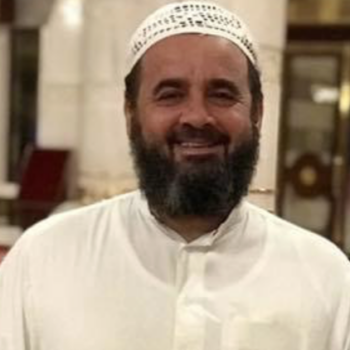
Shaykh Kehlan al-Jubury
Director of Markaz al-BukharyShaykh Kehlan was born in Dhuluiyyah, Iraq and is from the Juboor tribe.
He studied the sciences of Shari'ah followed by engineering at the University of Baghdad. He then took an MA in Islamic Theology from Punjab University and also obtained ijaza in hadith from the renowned Muhaddith, Shaykh 'Abd al-Ghaffar Hasan in Pakistan.
He now teaches sacred Shari'ah knowledge in Manchester after completing his Doctorate in Engineering from the University of Sheffield. Shaykh Kehlan has lectured alongside the world's most prominent scholars at various international meetings and symposia.
He is the UK Shariah Council Representative for the North of England and is also the editor of al-Hady al-Nabawy Magazine. Shaykh Kehlan is also the Director of Markaz al-Bukhary in Didsbury where he delivers fatawa.
Our Services






Mediation

In the first instance as Allah SWT says in the Qu’ran a family member from either side of the family should be appointed to help mediate between the husband and wife [4:35]. If this is not possible or such an attempt was not successful you may contact our Sharia department for a mediation meeting with one of our Shaykhs.
A mediation is strongly encouraged as Allah SWT says in the Qu’ran:
“The parties should either hold together on equitable terms or separate with kindness.” [2:229]
In light of this the mediation will enable both parties time to reflect in a calm environment before a final decision is reached.
To arrange mediation, please complete the Enquiry Form at the bottom of this page and one of our team will be in contact.
Counselling

If you would like to try and reconcile your marriage we can recommend a counselling service for you. Please complete the Enquiry Form at the bottom of this page and one of our team will be in contact.
Talaq (Divorce)

Talaq (طلاق) is the term for divorce where the husband wants to end the marriage. The typical steps to initiate a Talaq are:
- The husband must pronounce the Talaq once;
- Then a waiting period (iddah) begins;
- During this period, the couple can reconcile without a new marriage contract;
- If no reconciliation happens, the divorce becomes final after the iddah;
Detailed guidance is set out below.
Types of Talaq
There are three different types of Talaq dependent on what happened during the iddah period (see below for further details).
1. Talaq Raji
This is a reversible Talaq whereby the husband says one or two Talaqs. The couple have the option to reconcile within the iddah period without needing a new marriage contract. This is due to the marriage not being fully dissolved until the iddah ends.
2. Talaq Bain Sugra
This is an irreversible Talaq whereby the marriage ends at the completion of the iddah period, and the husband cannot take his wife back without a new marriage contract and Mahr (dowry). It occurs after either one or two Talaqs are pronounced and the couple do not reconcile within the iddah period.
3. Talaq Bain Kubra
This is the “triple Talaq” whereby a man pronounces Talaq three times in one moment or over separate times, making the Talaq final and irreversible. The couple cannot remarry unless the wife marries another man, consummates that marriage, and is subsequently divorced.
Iddah Period
The iddah period in respect to Talaq, is defined as a waiting period that a Muslim woman must observe after the Talaq before she can remarry. The length of the iddah period is three menstrual cycles or in the absence of menses three months.
Additional conditions that apply to the iddah period:
- If the Talaq was issued during menses the following menses will be considered as the first cycle for iddah.
- If the Talaq was issued whilst the wife is not on her menses then the following menses will be considered the first cycle for iddah.
- If the wife is pregnant the iddah will be until delivery. It is the husband’s duty to provide for the wife during the iddah period.
- If the Mahr was not paid in full to the wife at the time of the Nikah this must be paid as part of the Talaq process.
Our Talaq Procedure
Please read this carefully before applying to ensure you are aware of what the process will require of you.
- Please complete the Enquiry Form below
- Once we have received your enquiry, we will ask you to complete a detailed application form. At this stage you will be provided a case reference number.
- We will ask you to complete a more detailed application form, and at this stage we will assign you a case reference number.
- You will be required to make payment for your application before we commence any activity relating to your case. Please see charges section for details of costs.
- Your wife will be informed of your intention to issue a Talaq, and you both will be offered a mediation meeting.
- If a mediation takes place and a Talaq is still decided upon, an Islamic divorce certificate will be issued to both parties and the Iddah period will begin. The certificate must be signed before two witnesses.
- If no reconciliation happens during the Iddah period, the divorce becomes final.
- Please note any outstanding Mahr will have to be paid to your wife before your Islamic divorce can be settled.
Please note our Sharia Council only processes Islamic divorces and cannot advise on any Civil divorces.
If you wish to apply for a Talaq, please complete the Enquiry Form at the bottom of this page and one of our team will be in contact.
Khula

Khula (الخلع) is the term for divorce initiated by the wife and the husband agrees to this. As part of this divorce process the wife must pay the Mahr back to the husband.
Our Khula Procedure
- Please complete the Enquiry Form below.
- Once we have received your enquiry, we will ask you to complete a detailed application form. At this stage you will be provided a case reference number.
- You are required to make payment for your application before we commence any activity relating to your case. Please see charges section for details of costs.
- Once the detailed application form has been completed, your husband will be issued a notice. The notice will ask him if he agrees to the khula. If he does not agree we will ask him for his reasons, and he will have one month to respond. This can however be extended if there are extenuating circumstances.
- During the process we will ask you for a statement to confirm the reasons for your divorce. A copy of your statement will be sent to your husband. If there is a reason you do not wish to share the statement you must provide valid reasons.
- If your husband would like the opportunity to state his case or reconcile, you may be invited to a joint meeting with a member of the panel.
- If your husband agrees to the divorce, you must return the Mahr paid at the time of the marriage to your husband. Any other particulars forming part of the marriage contract may need to discussed and actioned according to the Sharia and Sunnah.
- If required, the Sharia panel can advise on matters to do with child custody and financial issues, but only from an Islamic perspective.
- If your husband does not reply to our first notice within the given timeframe, then a second notice will be sent allowing another month for his response. If he still does not reply, a third and final notice will be sent to him.
- If your husband does not reply to the third and final notice, the case will be presented to the Shaykhs at the Council to make a decision for the case. This could take up to two months as the Sharia panel meetings are scheduled once a month.
- If the Sharia panel decides to dissolve the marriage, a certificate of dissolution may be issued within two weeks of this decision and sent to both parties.
Please note our Sharia Council only processes Islamic divorces and cannot advise on any action under the jurisdiction of the courts of England & Wales.
If you wish to apply for a Khula, please complete the Enquiry Form at the bottom of this page and one of our team will be in contact.
Faskh

Faskh (فسخ) is the term for divorce when the wife wants to end the marriage and the husband does not agrees to this.
The dissolution of the marriage is undertaken by the Sharia panel after reviewing the case.
Our Faskh Procedure
Faskh of nikah is a dissolution of an Islamic marriage pronounced by a Sharia court, on application of the wife. This type of divorce is sought if the husband and wife do not mutually consent to divorce when the husband refuses to give ‘Talaq’ despite the marriage having broken down.
If you wish to apply for a Faskh, please complete the Enquiry Form at the bottom of this page and one of our team will be in contact.
Charging Structure
The following fees apply when using the Cheadle Masjid Sharia Council.
| Service | Fee |
|---|---|
| Issue Talaq | £150 |
| Khula | £250 |
| Faskh | £250 |
| Mediation session with a Shaykh | N/A |
Initial Enquiry Form
Our team will contact you within three working days following receipt of your enquiry.
Contact us
Contact Details
Email: sharia@cheadlemasjid.c2devm.uk
Telephone: 0161 437 1093 – option 5.
Office Hours
Our office hours are Monday to Thursday 10am to 3pm.
Emails and telephone calls will only be answered during office hours, if your call is diverted to voicemail, please leave a message and we will call you back within three working days.
Frequently Asked Questions
This takes place when the husband wants to end the marriage. This can be done verbally or in writing with two witnesses present.
To start the process the husband must pronounce the divorce once. After this there will be an Iddah period which is also known as the waiting period.
This takes place when the wife wants to end the marriage and the husband does not agrees to this. The dissolution of the marriage is undertaken by the Sharia panel.
This is waiting time a woman must observe before she can remarry.
Three menstrual cycles or in the absence of menses three months.
If the Talaq was issued during menses the following menses will be considered as the first cycle for iddah.
If divorce was issued whilst the wife is not on her menses then the following menses will be considered the first cycle for iddah.
If the wife is pregnant the iddah will be until delivery.
It is the husband’s duty to provide for the wife during the iddah period.
Mahr is the obligatory gift that the husband gives to his wife at the time of the Nikah/wedding.
If the Mahr was not paid in full to the wife at the time of the Nikah/wedding this must be paid as part of the Talaq process being initiated by the husband.
The wife must pay the Mahr back to the husband as part of the Khula process.
Contact the Sharia department for a declaration form.
Islamically a verbal Talaq is valid but to avoid any disputes it is best to have two witnesses that know the family to attest the Talaq.